
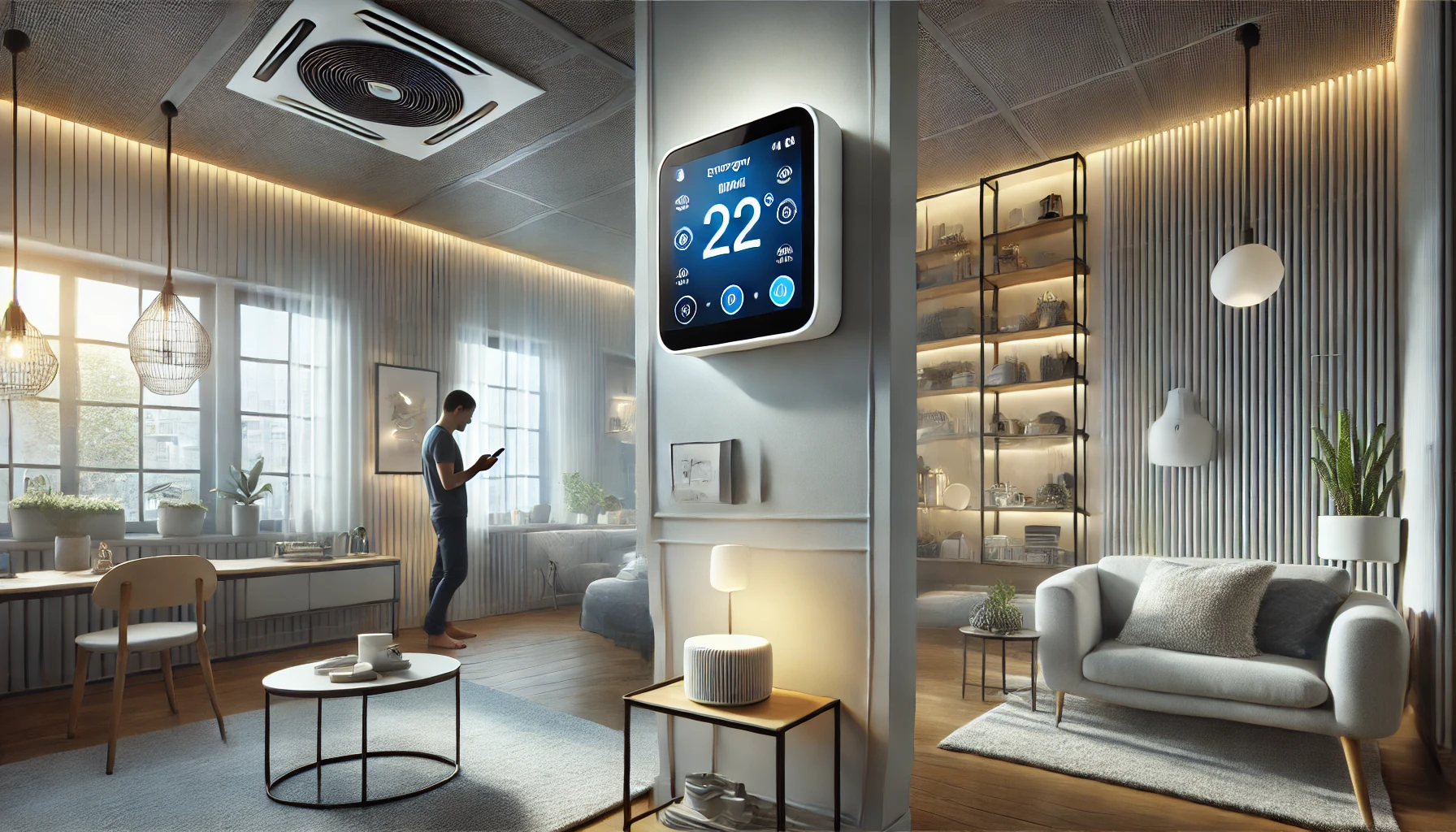
Heating and cooling account for a significant portion of your energy bill — sometimes up to 50%. That’s why smart thermostats are one of the most powerful and popular upgrades for anyone looking to reduce their environmental impact, save money, and increase comfort. These devices don’t just allow you to change the temperature from your phone — they learn your habits, adapt to your schedule, and optimize energy usage throughout the day.
Whether you live in a small apartment or a large family home, installing a smart thermostat can quickly pay for itself. In this article, we’ll explore what smart thermostats are, how they work, their key features, how much they can actually save you, and which models are leading the market in 2025.
What Is a Smart Thermostat?
A smart thermostat is an internet-connected device that lets you control your heating and cooling systems using your smartphone, tablet, or voice assistant. Unlike traditional thermostats, smart models come with a suite of features designed to enhance efficiency and simplify your life.
They can:
- Learn your daily routines and preferences
- Detect when you’re home or away
- Integrate with other smart home devices
- Provide energy reports and suggestions
- Allow remote access and control from anywhere
By automating temperature adjustments, smart thermostats reduce wasted energy — and that leads to lower monthly bills.
How Smart Thermostats Actually Work
At their core, smart thermostats use sensors, algorithms, and connectivity to automate climate control in your home. Here’s a breakdown of how the technology works:
1. Behavior Learning
Many smart thermostats learn your routine after just a few days of manual use. For example, if you typically lower the temperature before bedtime and raise it in the morning, the thermostat will begin to adjust automatically.
2. Occupancy Detection
Some models use motion sensors or geofencing (via your smartphone) to know when you’re home or away. If no one is detected, the system adjusts to an energy-saving mode.
3. Weather Integration
Smart thermostats often pull data from local weather forecasts and adjust your home’s temperature accordingly, reducing energy usage during hot afternoons or chilly nights.
4. Remote Control
You can control your thermostat from anywhere using an app. Whether you’re in bed, at work, or traveling, your system is just a tap away.
Top Features That Help Save Energy and Money
Let’s take a closer look at the specific features that make smart thermostats so effective at reducing both energy consumption and utility costs.
Smart Scheduling
Create custom schedules for different times of day, days of the week, or even seasons. No more forgetting to adjust the thermostat before leaving for work.
Learning Algorithms
Devices like the Nest Learning Thermostat use machine learning to study your habits and adjust temperatures based on your comfort preferences and behavior.
Usage Reports
Most smart thermostats offer detailed energy reports. These insights show you when you’re using the most energy and offer tips for improvement.
Eco Mode
An energy-saving mode that automatically activates when no one is home. It’s ideal for minimizing heating or cooling when it’s not needed.
Multi-Zone Support
Some systems support zoned heating and cooling, allowing different areas of your home to be controlled independently for better efficiency.
Voice Assistant Integration
Works seamlessly with Alexa, Google Assistant, and Siri. Control the thermostat hands-free with simple voice commands like:
- “Set the temperature to 72 degrees.”
- “Turn off the heat in the guest room.”
Real-Life Savings: What You Can Expect
So how much can you really save?
According to a Nest study, users save:
- 10-12% on heating annually
- 15% on cooling
Ecobee claims that users save up to 26% on annual energy costs by using smart scheduling, sensors, and remote access.
Here’s a breakdown based on average U.S. utility bills:
- Monthly energy bill: $150
- Annual savings: $180 to $350
- Payback time for a $200 thermostat: Less than 1 year
Bonus: Many utility companies offer rebates for installing ENERGY STAR-certified smart thermostats, sometimes covering up to 50–100% of the cost.
Popular Smart Thermostat Models in 2025
1. Google Nest Learning Thermostat (3rd Gen)
- Learns your routine in just a week
- Sleek design and easy installation
- Home/Away assist to save energy
- Works with most HVAC systems
2. Ecobee SmartThermostat with Voice Control
- Comes with a remote room sensor
- Supports multi-zone control
- Built-in Alexa and Spotify
- Excellent for larger homes
3. Honeywell Home T9 Smart Thermostat
- Smart room sensors to balance comfort
- App-controlled scheduling
- Works with Alexa and Google Assistant
4. Amazon Smart Thermostat
- Affordable and user-friendly
- Alexa-enabled automation
- Great entry-level option
Smart Thermostats vs. Traditional Thermostats
| Feature | Traditional Thermostat | Smart Thermostat |
|---|---|---|
| Manual scheduling | ✔️ | ✔️ |
| Learns user behavior | ❌ | ✔️ |
| Remote control | ❌ | ✔️ |
| Energy reports | ❌ | ✔️ |
| Motion detection | ❌ | ✔️ |
| Integration with smart home | ❌ | ✔️ |
| Utility rebates eligible | Sometimes | Often ✔️ |
The difference is clear. While traditional thermostats get the job done, smart versions elevate comfort, control, and savings.
Installation: DIY or Professional?
Installing a smart thermostat is often simple enough for DIY, especially if you’re replacing an existing digital model.
You can likely DIY if:
- You have a standard HVAC system
- You already have a C-wire (common wire)
- You’re comfortable following wiring diagrams
Hire a professional if:
- You’re unsure about electrical wiring
- You have a complex multi-zone or older HVAC setup
- Your home lacks a C-wire
Most installations take less than 30 minutes, and many manufacturers include video tutorials and detailed guides.
Extra Tips to Maximize Your Smart Thermostat
- Use Geo-Fencing: Set up location-based triggers so your thermostat knows when you leave or return.
- Pair with Smart Sensors: Use additional room sensors to balance temperatures throughout your home.
- Create Routines: Set automated actions like “Good Morning” to warm the house or “Goodnight” to lower temperatures.
- Stay Updated: Keep the device firmware updated for security and new features.
- Review Energy Reports: Use insights to tweak schedules or settings for better efficiency.
Environmental Benefits
Beyond saving money, smart thermostats contribute to a greener planet.
They help:
- Reduce carbon emissions
- Prevent energy waste
- Improve HVAC system efficiency and lifespan
If every home in the U.S. used a smart thermostat, the combined savings would reduce energy usage equivalent to millions of barrels of oil annually. That’s a big step toward sustainability.
Final Thoughts: Is a Smart Thermostat Worth It?
Without a doubt — yes.
A smart thermostat offers: ✅ Lower energy bills
✅ Improved comfort
✅ Remote control and flexibility
✅ Quick ROI (return on investment)
✅ Integration with your smart home ecosystem
It’s one of the most impactful changes you can make to your home for both your wallet and the environment. Whether you’re motivated by cost, convenience, or carbon footprint, a smart thermostat is an upgrade that delivers on all fronts.
The smartest homes are the ones that save you time, money, and energy — all at once. And it all starts with one thermostat.